BYD aggressively expands portfolio with Seal U PHEV launch and major Atto 3 tech overhaul
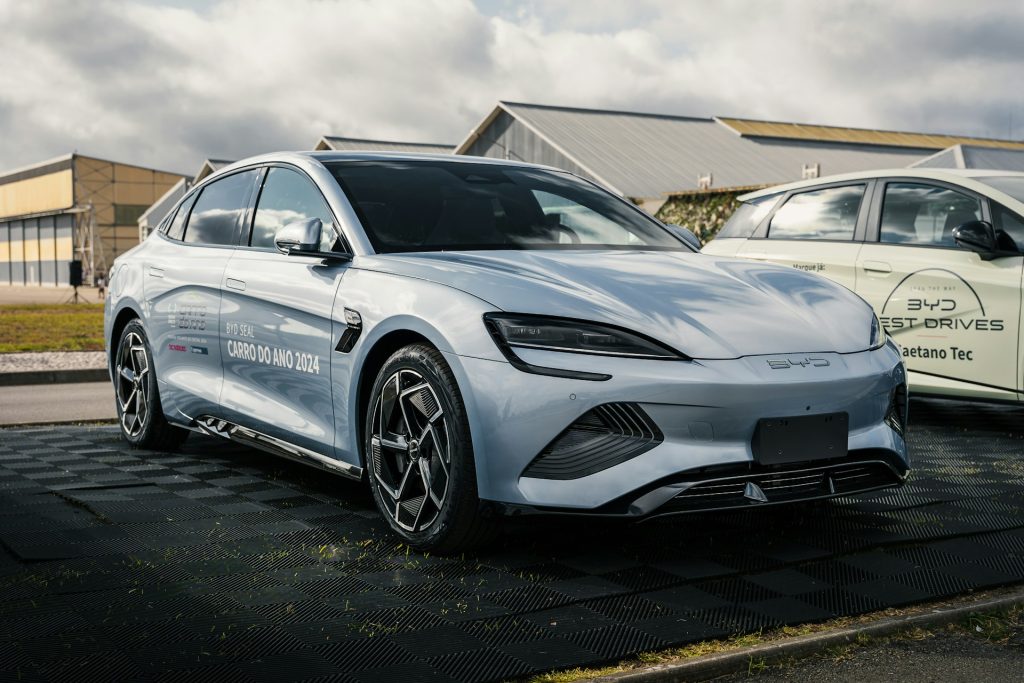
Chinese automotive major BYD is witnessing a significant expansion of its strategic footprint in the European market. After a year of exclusively retailing electric vehicles such as the Atto 3 crossover, the Seal saloon, and the Dolphin supermini in the UK, the manufacturer is now venturing into the plug-in hybrid (PHEV) segment with the introduction of the BYD Seal U family SUV. Concurrently, the brand has unveiled a comprehensive technical upgradation for its popular compact SUV, the Atto 3, dubbed the ‘Evo’ model, addressing previous concerns regarding range and charging capabilities.
Entering the PHEV mainstream
With a starting price tag of £33,315, the Seal U represents BYD’s maiden attempt to capture the lucrative plug-in hybrid market in the UK. While this marks the first of several PHEVs the company intends to launch over the coming years, it is worth recalling that BYD is no stranger to this technology. Back in 2008, the company launched the F3DM, which was the world’s first mass-produced PHEV. Although that model was something of a commercial failure, the automotive landscape has since evolved considerably, and PHEVs have firmly entered the mainstream.
The Seal U is positioned squarely to attract family SUV owners who are perhaps hesitant to make a complete switch to electric propulsion. It faces stiff competition from established rivals manufactured in Europe, including PHEV iterations of the Volkswagen Tiguan, Kia Sportage, and Toyota RAV4. To distinguish itself, BYD claims the Seal U is the most economical car in its class. In the ‘Boost’ specification, the vehicle can cover a commendable 671 miles on a full tank of petrol combined with a 100% battery charge, while the larger-battery variant extends this range to 699 miles.
Performance and driving dynamics
The Seal U DM-i range is offered exclusively as a plug-in hybrid with single- and dual-motor options, delivering power outputs between 215bhp and 319bhp via a smart single-speed transmission. The lineup includes the Boost and Comfort trims, both producing 215bhp, and the range-topping Design trim which offers 319bhp.
In terms of on-road performance, the vehicle has garnered praise for being very quiet and economical, boasting clever technology and ample cabin space. However, it is not without its detractors; the driving experience has been described as somewhat bland with a ride quality that is too soft, and the design is considered by some to be rather anonymous. Furthermore, the powertrains are noted to be on the heavier side.
Comprehensive overhaul for the Atto 3
While the Seal U caters to the hybrid demographic, BYD has not neglected its electric lineup. The Atto 3, historically the brand’s most accessible model in Europe, has undergone a significant evolution. The newly introduced BYD Atto 3 Evo addresses previous limitations regarding range and charging speeds. Although the exterior changes are subtle and the vehicle remains visually similar to the current model, the engineering modifications beneath the metal are extensive.
The most notable shift is the transition to an 800-volt system voltage, a substantial upgrade from the previous 400-volt architecture. This is paired with a larger 74.8 kWh battery, up from 60.5 kWh, utilizing BYD’s proprietary Blade battery with LFP cell chemistry. A key structural change is the adoption of Cell-to-Body technology, where the cells are integrated directly into the vehicle body structure, replacing the former Cell-to-Pack approach. This integration not only reduces weight but also facilitates a higher energy content, boosting the WLTP range to 510 kilometres from the previous 418 kilometres.
Powertrain shift and enhanced charging
In a major departure from its predecessor, the Atto 3 Evo moves the electric motor from the front to the rear axle. This new permanent magnet synchronous motor delivers significantly higher performance, offering 230 kW of power and 380 Nm of torque, compared to the previous front-motor output of 150 kW and 310 Nm. Consequently, the sprint from 0 to 100 km/h has been slashed to just 5.5 seconds, down from 7.3 seconds. For those seeking even greater performance, an all-wheel-drive variant is available for the first time, adding an asynchronous motor to the front axle for a total system output of 330 kW, achieving the century sprint in a mere 3.9 seconds, albeit with a reduced range of 470 kilometres.
Charging performance, previously a sore point, has seen a marked improvement. The peak charging power has escalated from 88 kW to 220 kW. The vehicle can now replenish its battery from 10 to 80 per cent in 25 minutes, a respectable figure in the current market. Additionally, a new Vehicle-to-Load (V2L) function allows external devices to be powered at up to 3.3 kW via an adapter.
Improved practicality and packaging
The mechanical reconfiguration has yielded practical benefits as well. The relocation of the motor to the rear necessitated a redesign of the chassis, which now features a five-link rear axle intended to enhance driving dynamics. This repackaging has freed up space, resulting in a 50-litre increase in boot capacity to 490 litres. Furthermore, the space vacated under the bonnet has been utilized to create a 101-litre ‘frunk’ (front trunk), adding to the vehicle’s utility.