Tesla’s Dual Narrative: Robust Financials Meet Political Headwinds as Cathie Wood Doubles Down
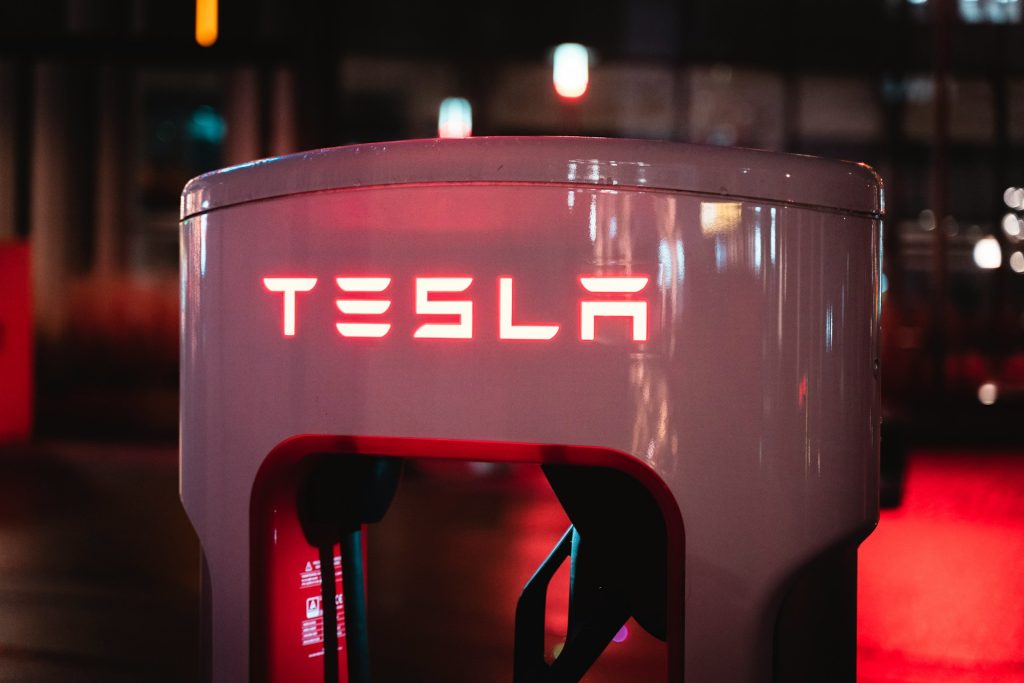
Veteran investor Cathie Wood remains completely unfazed by the recent market noise. She firmly believes that if she had to park her funds in just one company today, it would undoubtedly be Tesla. Speaking on Steven Bartlett’s popular podcast “The Diary Of A CEO,” the full episode of which hit YouTube last week, the Ark Invest CEO elaborated on her bullish stance.
For Wood, the EV maker represents a unique convergence of three massive platforms: artificial intelligence, energy storage, and robotics. This overarching vision is precisely why her firm stands firmly by its ambitious $2,600 price target for the scrip, a projection initially floated in June 2024 and expected to materialise over a five-year horizon.
Solid Fundamentals Post Q4 2025
Wood’s deep conviction finds solid backing in Tesla’s recent operational performance. Looking at a broader six-month window, the company’s stock actually witnessed a healthy 15% uptick, climbing from roughly $352 to $405. This rally was primarily fuelled by the street reacting positively to the Q4 2025 earnings report, which largely laid to rest any simmering anxieties about margin compression.
CFO Vaibhav Taneja reported a total gross margin of 20.1%. More impressively, automotive margins minus regulatory credits saw a tangible improvement, jumping from 15.4% to 17.9% despite a 16% dip in vehicle deliveries. This points directly to a much tighter grip on cost control and an improved product mix. Even after bearing the brunt of tariff headwinds exceeding $500 million, the automaker successfully generated a free cash flow of $1.4 billion. Adding to the overall cheer, full-year energy revenues clocked in at almost $12.8 billion. That registers a robust 26.6% year-on-year growth and securing record gross profits for the segment.
The Massive Pivot to Autonomy and Optimus
The management’s narrative now stretches way beyond just electric cars. They are leaning heavily into a massive 2026 investment cycle focused on AI infrastructure, the Cybercab, and humanoid robotics. In a massive operational shift, the company confirmed plans to phase out the production of the Model S and X next quarter. The core objective here is to repurpose the Fremont facility into a dedicated Optimus factory, targeting an eventual rollout of one million robots annually.
Elon Musk himself highlighted in a CNBC interview last month that thousands of these humanoid workers will be deployed across Tesla floors by the end of this year. He expects Optimus to scale up faster than any product in history. Simultaneously, the Full Self-Driving (FSD) ecosystem is scaling rapidly, boasting nearly 1.1 million paying subscribers, while unsupervised robotaxis are already ferrying paying customers on the streets of Austin. Taking cognizance of these tangible strides, institutional buyers have actively tweaked their portfolios. Heavyweights like Avalon Trust, Stevens Capital, and Kovitz Investment Group aggressively bulked up their holdings, keeping overall institutional ownership elevated at around 66.2%.
Political Turbulence Takes a Heavy Toll
Yet, the journey has been anything but smooth. The scrip, currently trading near the middle of its 52-week range of $214 to $499, has experienced extreme volatility recently. Much of this is directly tethered to Musk’s entry into and subsequent fallout with the political establishment. Rewind to December, right post the US presidential elections. Tesla’s stock touched a peak closing price of $479 on the back of Musk throwing his weight behind Donald Trump’s successful campaign. However, his deep involvement with the White House DOGE office quickly triggered widespread consumer boycotts. By March, the stock had surrendered over 40% of those December gains.
Alarmed investors repeatedly urged the billionaire to shift his gaze back to his core business. While Musk promised during a May earnings call to dial back his DOGE duties, the political drama took a fresh turn last week. The supposedly solid relationship between Musk and Trump went completely sour after Musk publicly criticised the president’s “big beautiful bill.” He even went as far as agreeing with an X post demanding Trump’s impeachment before hastily deleting it. The US President retaliated sharply, threatening to scrap government contracts with Musk’s empire as an easy way to save budget money. The market reaction was brutal. The ongoing spat triggered a massive 14% plunge in Tesla’s stock on Thursday alone, pushing the company’s year-to-date losses to nearly 27%.
A Calculated Disengagement?
So, is the political chaos an unplanned disaster or a highly strategic exit? Wood suspects it might lean towards the latter. In a fresh video posted on Ark Invest’s YouTube channel this Friday, she floated a rather interesting hypothesis. She reckons the public falling out with the Trump administration was, at least in part, a heavily orchestrated move by Musk himself. Recognising the undeniable brand damage Tesla has suffered over the past year, he might simply be trying to deliberately uncouple himself from the government and shed any rigid partisan affiliations to win back his broader consumer base.