The Maranello Paradox: Bending Rules with the Purosangue and the Ghost of the Gated Manual
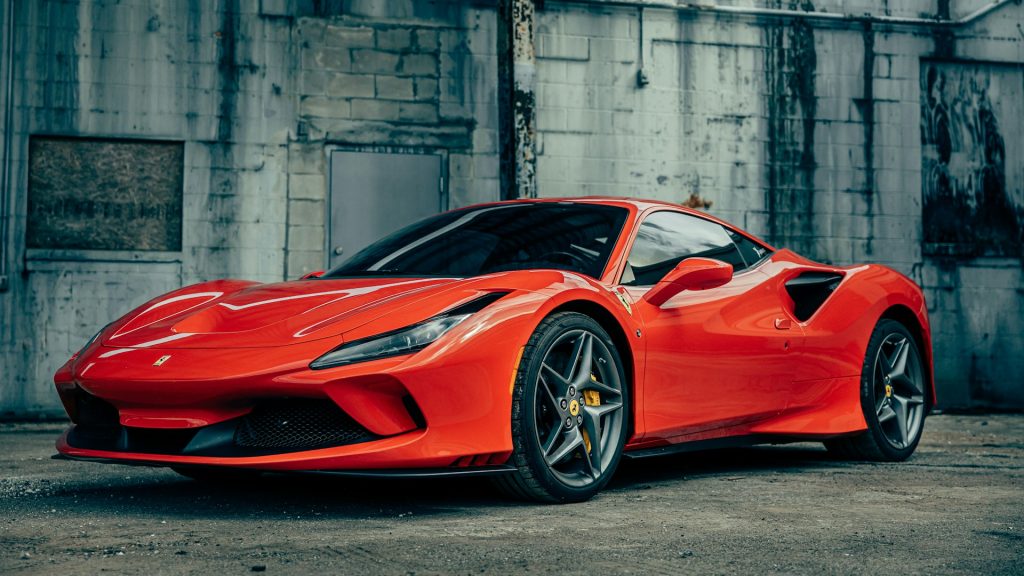
Let’s talk about the Ferrari Purosangue. An SUV from Maranello. Not too long ago, the top brass swore blind that they would never build such a thing. And frankly, if you ask them today, they still vehemently deny it’s an SUV. But let’s call a spade a spade. It has four-wheel drive, a raised ride height with 185mm of ground clearance, and proper rear doors. Ferrari has officially joined the ranks of Porsche, Aston Martin, Bentley, and Lamborghini, but they’ve done it in a way that is undeniably Ferrari.
Before petrolheads roll their eyes at another sports car maker cashing in on the tall-car craze, just look at what’s under the bonnet. In a segment obsessed with forced-induction V8s, Ferrari has chucked in a mesmerising, naturally aspirated 6.5-litre V12 that pushes out a properly mad 715bhp and 528lb ft of torque. It sits neatly behind the front axle, sending power to a highly complex driveline derived from the old FF and GTC4 Lusso. There’s an eight-speed twin-clutch transaxle sitting at the back, and a bespoke two-speed gearbox pulling power from the front of the crank to give you part-time all-wheel drive. This clever transaxle setup gives the car a near-perfect 49:51 weight distribution, which is quite a feat when you realise this behemoth tips the scales at a hefty 2033kg before you even put a driver in the seat.
Mind you, it doesn’t handle like a heavy family hauler. The Purosangue sits on a completely bespoke aluminium monocoque—unlike the Urus or Bentayga which share architectures—and it rides on an absolutely brilliant active suspension system. Every single damper is controlled by its own electrically powered gear assembly. It’s an eye-wateringly expensive bit of kit, but the payoff is uncanny, class-leading body control and an accuracy that traditional super-SUVs could only dream of.
From a practicality standpoint, it is a genuine shift for the brand. Yes, at 2.0 metres wide, navigating tight city traffic feels preposterously daunting, and the 16.5mpg thirst is definitely going to sting. But at 4.97 metres long, it perfectly packages a comfortable four-seater layout. Those rear doors hinge backwards, meaning the B-pillar is kept compact and the overall wheelbase stays surprisingly manageable at 3018mm. Space in the back is sorted—a regular-sized adult sitting behind another will find a hand’s width of room for their knees and head. It can get a bit dark back there, but considering the rear seats fold electrically and it even comes with Isofix child-seat mounts, it is lightyears ahead of the GTC4 in terms of usability. Prices start at £313,120, though word on the street is dealers won’t even entertain you unless you’re speccing up an extra £60,000 in options, easily pushing the asking price past £364,093. It is a wildly expensive machine, far beyond any of its rivals.
Now, while the sheer size and automated wizardry of the Purosangue show Ferrari leaning heavily into modern utility, it seems they haven’t entirely forgotten the purists who miss the visceral thrill of the old days. If you’ve been mourning the death of the classic Ferrari manual gearbox, there’s some brilliant news brewing in the background.
Recent patent filings spotted by CarBuzz in the US reveal that Maranello is actually prepping a revival of their iconic open-gate manual shifter. But because this is modern Ferrari, there is a massive twist. The system they are engineering clubs the gorgeous aesthetics of the classic six-speed metal gate and spherical gear knob with modern dual-clutch transmission technology.
It is a pure shift-by-wire setup. There is absolutely no mechanical linkage between the stick in your hand and the gearbox at the back. Instead, the lever moves along two axes, and a pin at its base translates your physical shifts into electronic signals that command the dual-clutch system to swap cogs. To make sure it doesn’t just feel like a lifeless video game controller, Ferrari has engineered spring-loaded rollers with defined detents sitting right under the gate. This gives you that heavy, satisfying, tactile clack as the lever slots into gear, artificially mimicking the exact feel of their vintage sportscars.
What makes this incredibly clever is the software backing it up. Because the resistance of those internal springs is electronically controlled, the system can physically alter the feedback depending on the situation, locking you out of certain gears to keep you from accidentally money-shifting into a low gear at high speeds. The patent sketches also show buttons for Reverse, Neutral, Drive, and Manual. For your daily office run or crawling through traffic, you can let the computer handle the shifts automatically. But the moment you hit the twisting ghats and want to feel properly connected to the machine, you flick it into manual and row your own gears.
It is a fascinating dual reality for the brand right now. On one end, they are pushing the boundaries of what a massive, tech-heavy luxury cruiser can do dynamically. On the other, they are finding incredibly nerdy, over-engineered ways to keep the tactile romance of driving alive. They might be bending their own rules, but the soul of Maranello seems very much intact.