Opel’s Electric Offensive: From the 281-HP Mokka GSE to a Brand New Leapmotor-Backed C-SUV
Opel is orchestrating quite the aggressive comeback in the performance vehicle segment, and they are definitely not doing it by halves. The Rüsselsheim-based carmaker recently did the honors of handing over the keys of their brand new Mokka GSE to German racing driver Sophia Flörsch. She naturally steps in as the brand ambassador for this sporty compact SUV, but the underlying context here is anything but incidental. Flörsch is currently doubling up as the test and development driver for the Opel GSE Formula E Team, which is gearing up to enter the ABB FIA Formula E championship next season. It is a very deliberate convergence, seamlessly marrying the fastest civilian car in Opel’s stable with their premier electric single-seater.
Speaking of outright speed, the Mokka GSE is firmly cementing its position as the fastest 100% electric production Opel we have seen hitting the showrooms. The electric motor churns out a solid 207 kW, translating to 281 horsepower and an instant torque delivery of 345 Nm. It practically dismisses the 0 to 100 km/h sprint in just 5.9 seconds, eventually maxing out at 200 km/h. For an electric passenger car from Opel, these figures are entirely unprecedented. On the efficiency front, the company is claiming a very respectable 18.5 kWh/100 km on the combined WLTP cycle, alongside zero tailpipe emissions, securing it an A rating on the European energy label.
What really makes this SUV tick, though, is how heavily it borrows from its competition-spec sibling, the Mokka GSE Rally. The engineering team has directly ported over the multi-disc Torsen friction limited-slip differential, the bespoke chassis setup, and the hydraulic dampers straight from the rally circuits. Even the high-voltage components trace their roots back to the race car. It is a familiar playbook—highly reminiscent of what we saw with the Renault Megane RS Trophy or the Hyundai i30 N—bringing track-focused technology to the tarmac while keeping mass production costs well in check.
Roping in Sophia Flörsch is a masterstroke in itself. The 24-year-old Munich native has rapidly emerged as one of the most visible faces in European motorsport today. Having progressed through regional Formula 3 into the international F3 championship, she really captured the world’s attention with her sheer resilience after surviving that horrific, high-flying crash at the 2018 Macau Grand Prix. Furthermore, her ongoing advocacy for gender mixity in motorsports and her prior outstation stint in Extreme E make her the absolute perfect fit for a forward-looking electric racing program.
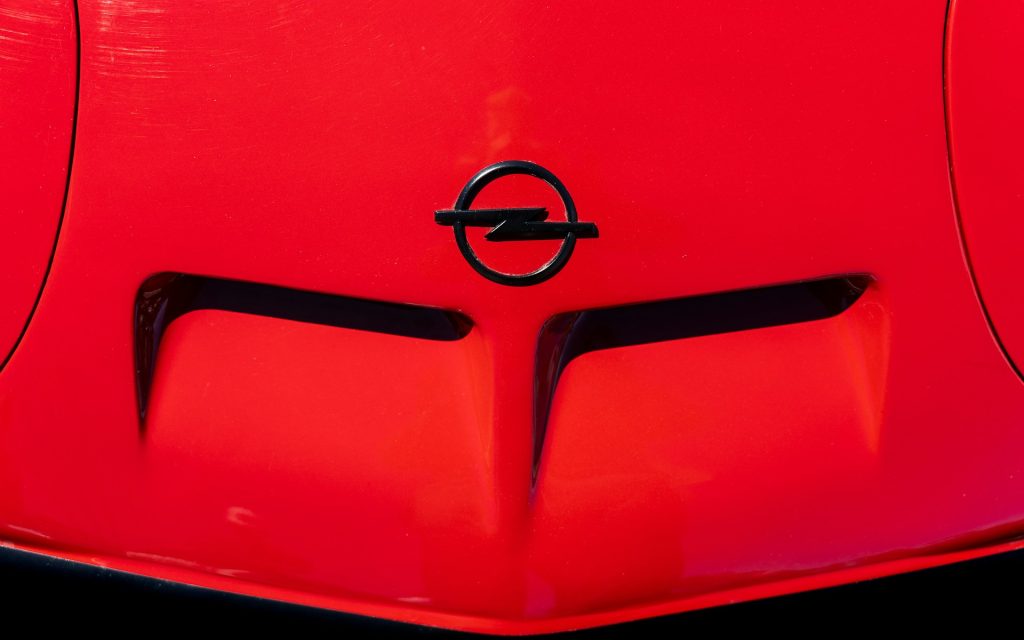
For Opel, this entire communication exercise dovetails perfectly with their broader global game plan. Going by the strategic roadmap Stellantis showcased recently in Auburn Hills, Opel-Vauxhall sits on the second tier of the group’s hierarchy, just trailing the primary quartet of Jeep, Ram, Peugeot, and Fiat. Therefore, the brand desperately needs to carve out a distinct visual and emotional identity, especially since they are sharing underlying platforms with their sibling brands. Resurrecting the GSE badge—a heartfelt nod to the iconic Gruppe Sport Experimentell cars of the 1970s—is essentially the spearhead of this renewed brand strategy.
But Opel isn’t just looking at catering to the enthusiasts; they are aggressively targeting the volumes as well. Stellantis has confirmed that a brand new, fully electric Opel SUV is slated for a 2028 launch. Slotted into the heavily contested C-segment, this upcoming vehicle is expected to sit right between the Frontera and the Grandland to complement the upper-end lineup, though official dimensions, battery range, and pricing are yet to be disclosed. The objective here is crystal clear: fast-track the brand’s electrification journey in record time to tackle the European market head-on.
This is exactly where their strategic tie-up with Chinese EV maker Leapmotor comes into the picture, setting what Stellantis considers a benchmark for efficient global collaboration. The division of labor is cleanly demarcated. The SUV is being conceptualized and developed right out of Germany. The teams in Rüsselsheim, backed by an international crew, are handling the signature exterior styling, the cabin ergonomics, chassis engineering, and their bespoke lighting and seating technologies. Simply put, the visual identity and the in-cabin feel will remain unmistakably Opel.
On the flip side, Leapmotor is bringing the heavy technological lifting to the table. The vehicle will be underpinned by the Chinese firm’s latest electric architecture and battery tech—components that are already doing duty in Leapmotor cars currently sold across Europe via the Stellantis network. By leveraging this pre-existing, proven platform rather than starting from absolute scratch, Opel is drastically cutting down the gestation period. CEO Florian Huettl recently pointed out that this synergy should bring the development time down to under two years. In an automotive industry where product cycles routinely stretch beyond four years, this turnaround time is quite remarkable. He envisions this as a massive leap toward delivering cutting-edge yet accessible EVs to the masses.
Finally, when it comes to the actual manufacturing, the 2028 electric SUV is likely to leverage Stellantis’s existing European footprint. Production at the Zaragoza facility in Spain is currently under serious evaluation. This plant has been the historic home for Opel’s B-segment operations since 1982 and is already assembling the new Corsa alongside its upcoming GSE variant. Accommodating this new electric C-SUV on a fresh assembly line out there in Zaragoza would allow the group to seamlessly maximize their logistical synergies and keep operations tightly knit on the continent.